


05 Oct Processing MI-TRAP Noise Measurements Across Europe
Understanding how environmental noise affects daily life is an important step toward creating healthier and more liveable cities. To collect data efficiently across multiple cities, MI-TRAP used portable noise sensors that continuously recorded environmental noise levels. Because these sensors are compact and cost-effective, they enabled measurements to be carried out in several locations simultaneously. To improve consistency, the recorded measurements were processed using a correction method developed from a comparison with a certified reference instrument in Copenhagen.
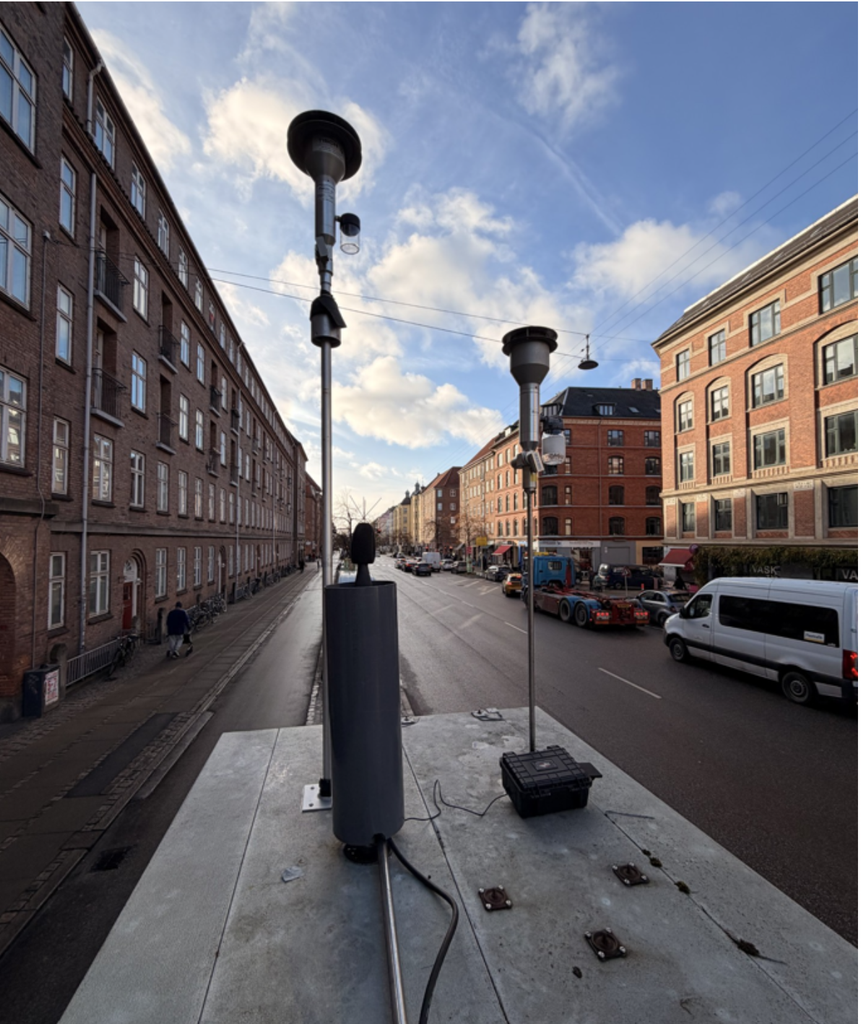
Over the past months, the first processing round of noise measurements collected across the MI-TRAP pilot cities has been completed, providing an initial overview of environmental noise. After correction and quality control, the measurements show clear differences between monitoring locations, with average Lden values ranging from around 69 to 78 dB(A) and night-time levels (Lnight) ranging from approximately 62 to 71 dB(A). While the measurements were carried out during different seasons and campaign durations, the harmonized processing approach ensures that the data can support future analyses of urban noise patterns across Europe.
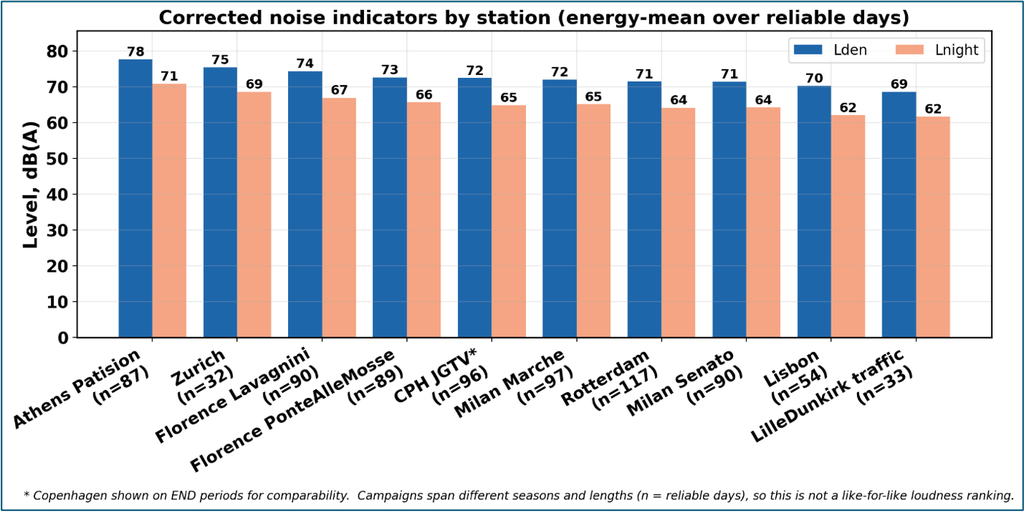
The completed processing of measured noise so far marks an important milestone for MI-TRAP. Data processing will continue as the remaining measurements are completed, including the ongoing campaign in Prague. A final processed dataset is expected later this year and will form the basis of an upcoming scientific publication assessing environmental noise across the MI-TRAP pilot cities.
Please feel free to contact Jibran Khan (E-mail: jk.envs@gmail.com) for any questions and feedback, who is leading and supervising noise assessment in the MI-TRAP.