


06 May Blog | Pioneering the Next Generation of Air Quality Monitoring with MI-TRAP
By Arpit Malik, Andreas Nowak, André Wählisch, Burkard Beckhoff
The air we breathe in modern cities is changing, and we do need advanced methods to monitor it. While larger particles are removed out of the air by modern engine exhaust filters the particle mass is dropping continuously. However, modern engines are still producing smaller and nastier particles that traditional measurements may not capture efficiently. Furthermore, emerging sources like non-exhaust emissions and microplastics requires advancement in the way how we quantify them in terms of chemical composition to identify reliable tracer for this kind of sources. Addressing this critical gap requires evolved and unparalleled measurement methods—which is exactly where PTB (the national metrology institute of Germany) steps in. As a key driver in European initiatives like the MI-TRAP project, PTB is advancing air quality science on two vital frontiers: developing the primary standards necessary to precisely count health-threatening ultrafine particles (UFPs, particle diameter smaller than 100 nm), and utilizing advanced, reference-free X-ray fluorescence to decode their complex elemental makeup. By leading rigorous, cross-border equipment intercomparisons and standardizing these cutting-edge techniques, PTB ensures that the data mapping of the environmental impact for traffic pollution is accurate, traceable, and universally trustworthy.
Ultrafine Particles: The New Frontier of Air Quality Measurement
As vehicle technology advances, we are seeing a major environmental victory: the total mass of exhaust pollution is dropping. But there is a catch. Because modern engines produce smaller, lighter emissions in terms of mass concentration. Therefore, measuring particulate emissions simply by “weight” is no longer telling the whole story. Consequently, air quality monitoring guidelines and emission monitoring regulations are shifting toward a more precise metric: counting the number of particles (PN) with a special emphasises on UFPs. While they barely register on a mass scale, UFPs are incredibly dangerous as they are small enough to cross into our bloodstream through respiratory organs and are strongly linked to cardiovascular diseases.
Within MI-TRAP, UFPs is a key metrics being monitored across traffic sites at major European cities to investigate how traffic emissions physically transform into the air we breathe. But you can’t investigate without accurate measurements —which is exactly where PTB steps in. The airborne nanoparticle working group (WG3.43) at PTB work towards the further development of the primary standards for UFPs and implementation of traceability chains with improved uncertainties.
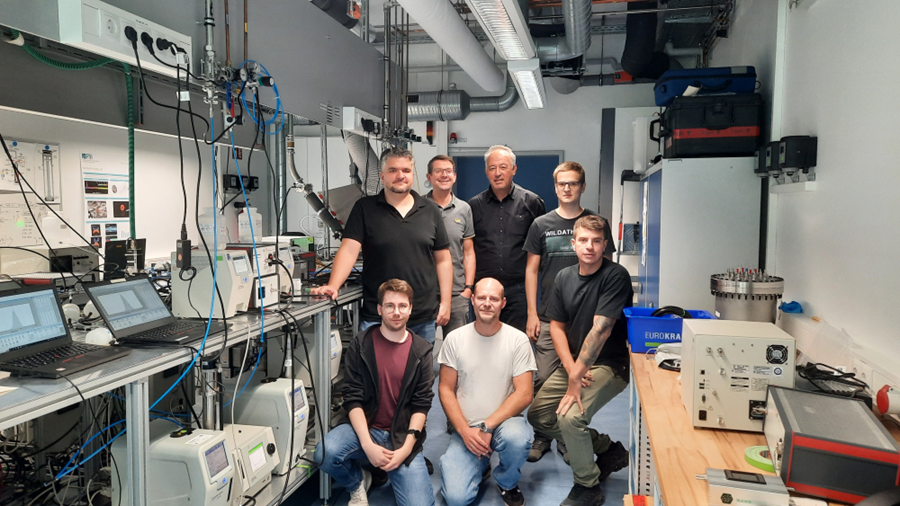
Within MITRAP, we are pushing for a major upgrade in how we count solid and total (semi-volatile + solid) UFPs. Instead of the traditional 10–800 nm scan taken every 5 minutes, we are focusing on the 1–300 nm range with more focus on smaller particles with improved temporal resolution. To ensure this data is consistent across all MITRAP pilot cities, we recently hosted a specialized intercomparison workshop. By testing equipment side-by-side, we guarantee that our air quality data is perfectly aligned, traceable, and trustworthy.
Shining a Light on Aerosol Composition
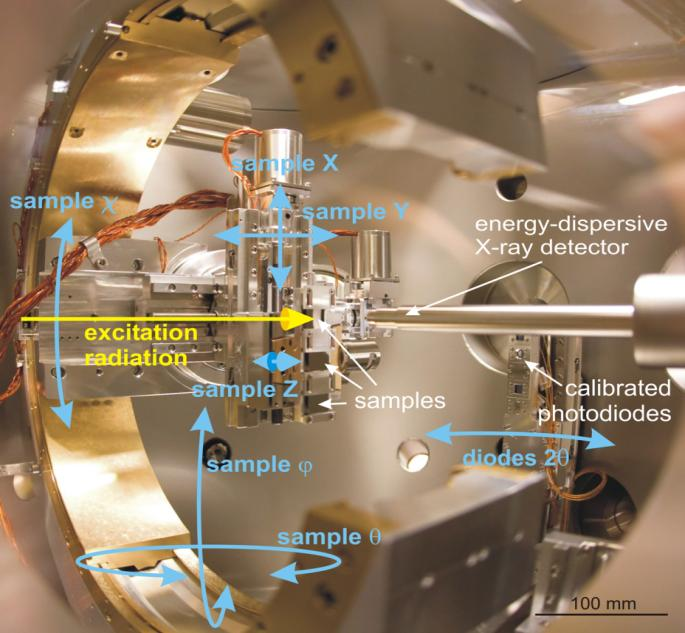
PTB also contributes to the MI-TRAP project using X-ray radiation-based methods. Techniques such as reference-free X-ray fluorescence analysis provide a precise and accurate look into aerosol materials after they have been collected with specialized equipment. Due to the high energy of the X-ray radiation involved in these experiments, it is possible to penetrate deep into the material and analyze its elemental composition, including the detection of heavy metals and other inorganic compounds. This provides valuable insight into the chemical makeup, and with that, potential environmental impact of airborne material.
During the MI-TRAP project, PTB worked closely with its Italian partner, INFN, to organize an interlaboratory comparison for several Xact devices used in different cities all over Europe. Such comparisons, also known as round-robin tests, can help evaluate analytical procedures, verify the reproducibility and repeatability of a technique, or simply identify problematic equipment when performed correctly. The realization and evaluation of such complex comparisons require close collaboration between many laboratories and participants. This approach greatly benefits from the synergistic effects of international projects like MI-TRAP and is crucial for ensuring the quality of analytical results.
Conclusion
As urban emission profiles continue to evolve, the scientific tools used to monitor them must stay one step ahead. Understanding how the particulate emissions from traffic specific pollution pattern and they transform into the air we breathe requires both knowing exactly how many ultrafine particles are in the air and understanding what they are made of. Through its pivotal role in the MI-TRAP project, PTB delivers on both fronts. By providing the primary particle counting standards, applying reference-free X-ray analysis, and organizing intercomparison studies for both UFP metrics and chemical composition. PTB helps here as National Metrology Institute of Germany to ensure that the measured particulate emission data at major traffic sites in Europe is accurate, traceable, and reliable.
Author(s) Bio:
- Arpit Malik: Post Doctoral Researcher, WG343, PTB-Braunschweig, Background in aerosol measurement techniques including optical properties and particle number size distribution.
- Andreas Nowak: Team Leader of WG 343, PTB-Braunschweig, long-term experience of about 30 years in counting of particles in the air those nasty tiny once
- André Wählisch: Post Doctoral Researcher, WG724, PTB-Berlin, Background in X-ray spectrometry measurement techniques including reference-free XRF and related methods.
- Burkhard Beckhoff: Team Leader of WG 724, PTB-Berlin, long experience in establishing traceable X-ray characterization techniques at both the nano- and microscales.