


16 Apr Blog | Measuring the Air We Breathe: Monitoring Ship Emissions at the Lisbon Cruise Terminal
By Catarina Gameiro, Marta Almeida and Tiago Faria, IST-ID Portugal
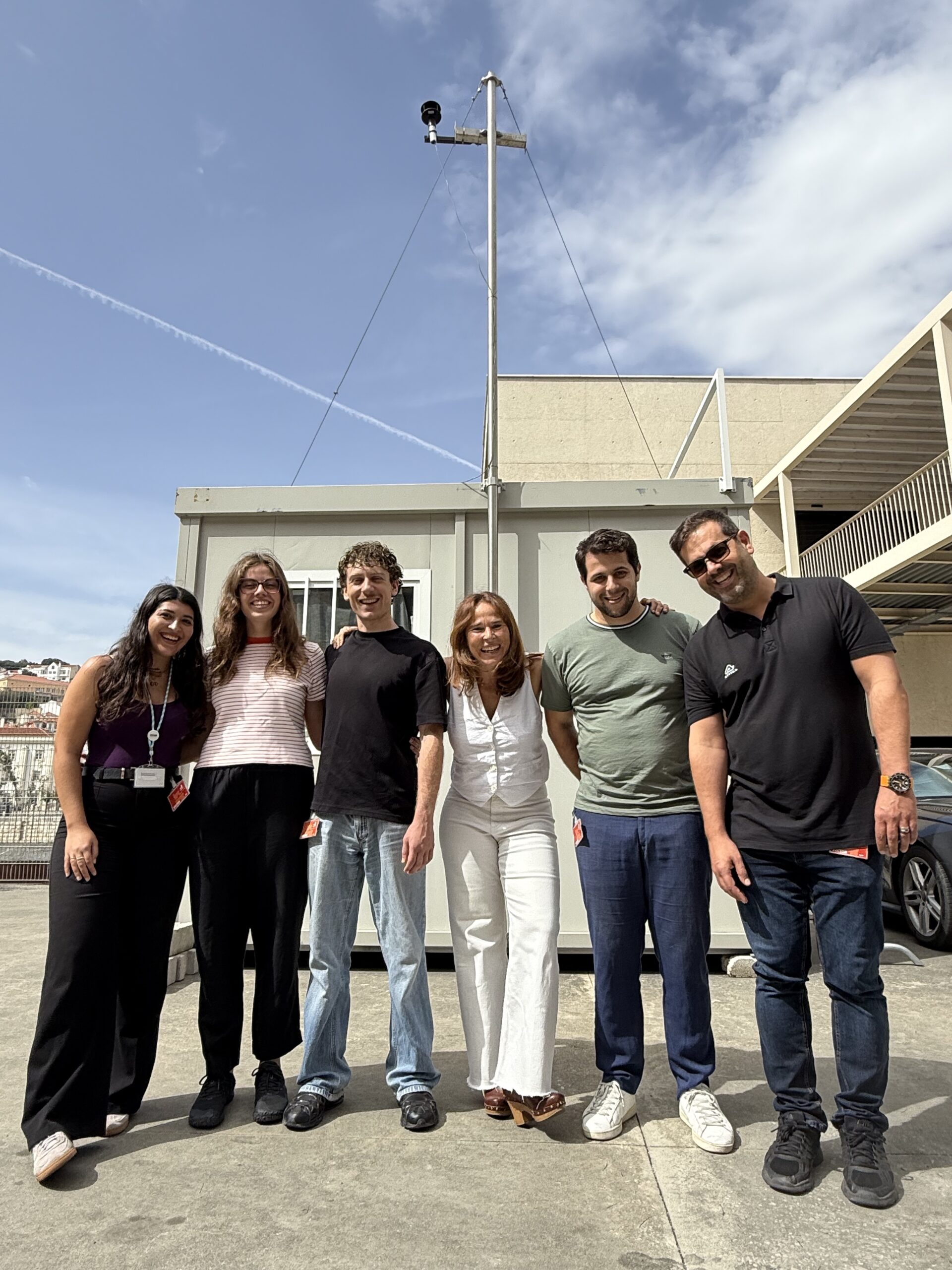
The ObservAr Team: Matilde Dinis, Catarina Gameiro, João Martinho, Marta Almeida, Tiago Faria and Miguel Felizardo in the Lisbon Cruise Terminal with the High-Resolution Monitoring Station behind.
Lisbon is a city defined by its connection to the sea. For centuries, ships arriving along the Tagus River have shaped its economy, culture, and global identity. Today, maritime activity remains a key part of Lisbon’s urban life, particularly through the growing cruise tourism sector. In recent years, the Port of Lisbon has experienced record activity, welcoming over 760,000 cruise passengers and 369 cruise ship calls in 2024 alone, highlighting its importance as a major European cruise destination.
However, the benefits of maritime activity also come with environmental challenges. Ships burn large quantities of fuel and can emit pollutants that affect air quality in port cities. Understanding these emissions and their impact on the surrounding urban environment is therefore essential.
To address this challenge, researchers from Instituto Superior Técnico carried out an unprecedented high-resolution air quality monitoring campaign at the Lisbon Cruise Terminal, as part of the European Horizon project MI-TRAP – Mitigating Transport-related Air Pollution in Europe. The campaign represents one of the most detailed measurements ever performed in the city to understand the influence of maritime transport on urban air pollution.
The Measurement Station in the Port
The monitoring station was installed in the Lisbon Cruise Terminal in Santa Apolónia, operating from 20 March to 31 August, covering the busy cruise season when ship activity in Lisbon is particularly intense. Positioned close to the docking area, the instruments were able to capture pollution plumes emitted during ship arrivals, departures, and hoteling operations while docked.
For a port located so close to the city center, monitoring these emissions is crucial. The cruise terminal sits just a short distance from residential neighborhoods, public spaces, and busy transport corridors, meaning that emissions released at the port can directly influence the air breathed by Lisbon’s residents and visitors.
To capture a comprehensive picture of the pollutants present in the air near the cruise terminal, the station was equipped with a combination of advanced instruments capable of measuring different characteristics of atmospheric particles and combustion emissions. Particular attention was given to black carbon (BC) and ultrafine particles (UFP), two key indicators of transport-related pollution.
BC concentrations were continuously measured using an AE33 Aethalometer, while the number and size distribution of UFP were monitored using a Scanning Mobility Particle Sizer (SMPS) and a Condensation Particle Counter (CPC). Coupled with these instruments was a Catalytic Stripper, used to measure only the solid particles emitted directly from combustion sources, such as ship engines.
To complement these measurements, an Optical Particle Sizer (OPS) was also included in the setup along with instruments capable of analyzing particle composition, such as the Aerosol Chemical Speciation Monitor (ACSM) and the Xact, provided information on the chemical components and trace metals present in airborne particles.
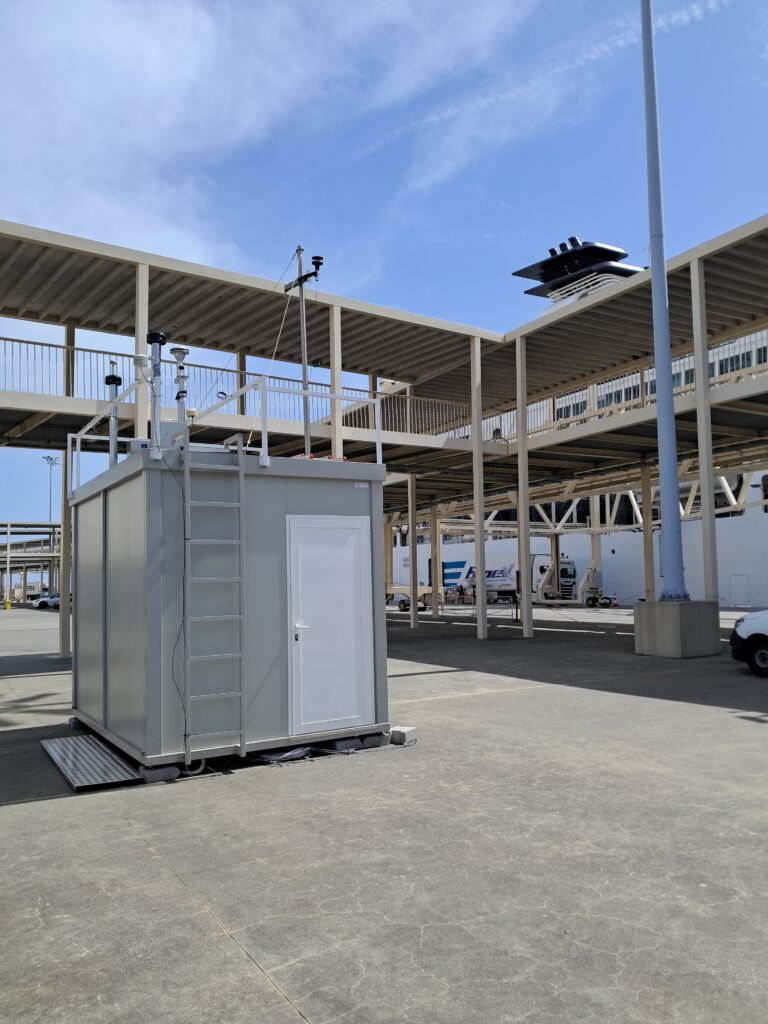
High-Resolution Station located in the Lisbon Cruise Terminal to measure ship emissions.
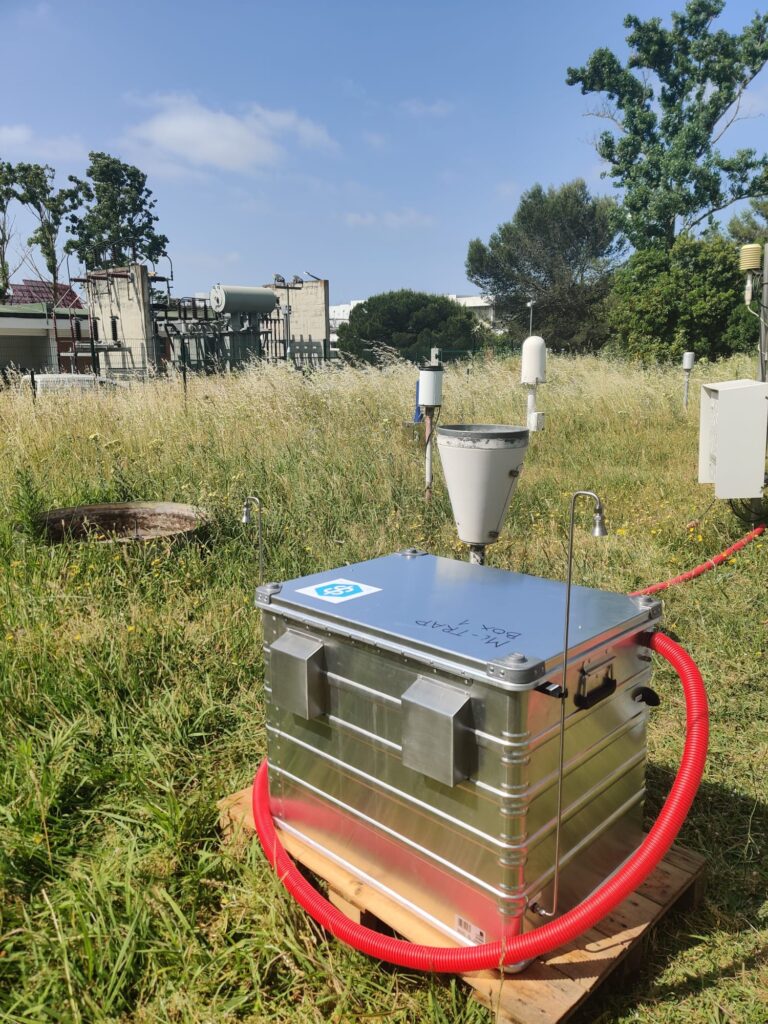
Cost-Effective Box in IPMA to measure aviation emissions.
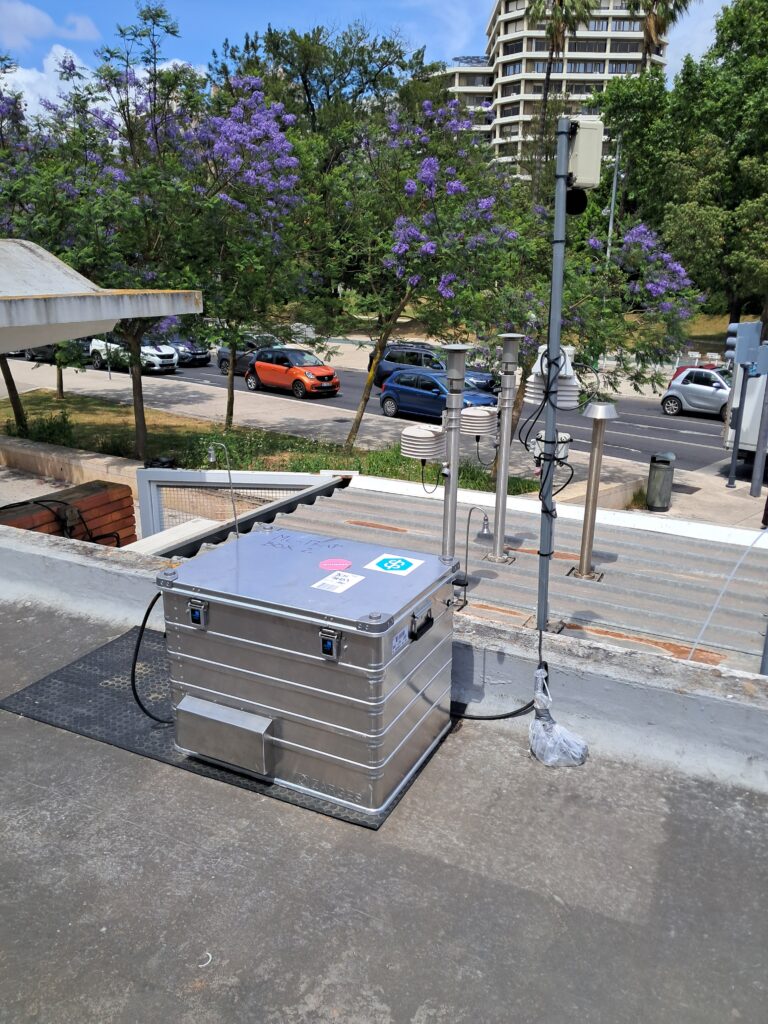
Cost-Effective Box located in Entrecampos to measure traffic emissions.
Looking Beyond the Port: A City-Wide Monitoring Approach
While the cruise terminal station provided detailed information about maritime emissions, the campaign was designed to be broader picture of transport-related air pollution across the city.
Two additional monitoring sites were established across Lisbon. One was located in Entrecampos, representing an urban traffic environment, where road transport emissions dominate, and a second station in the Portuguese Institute for Sea and Atmosphere (IPMA) near the Lisbon airport, capturing the influence of aviation emissions.
Together, these three locations—port, traffic, and airport—formed a unique monitoring network across Lisbon allowing to compare how different transport sectors contribute to the air pollution in the city.
What Comes Next?
As cities grow and mobility increases, managing air pollution becomes an increasingly complex challenge. Transport systems such as ports, airports, and busy road networks are essential to urban life, yet they also represent important sources of emissions.
Within the MI-TRAP project, the Lisbon results will also be compared with measurements from other European cities facing similar challenges. By sharing data, methods, and experiences across the consortium, the project contributes to building a stronger scientific basis for tackling transport-related air pollution and supporting healthier urban environments in the future.
Ultimately, this knowledge helps cities like Lisbon move toward a future where economic activity and environmental protection go hand in hand, ensuring that the benefits of global connectivity do not come at the expense of public health.