


12 Feb Blog | Measuring black carbon and ultrafine particle emissions from ships at Aarhus harbour
By Francesco Capelutti, Kirstine Klok Dupont and Quynh Thu Nguyen, DTI Denmark
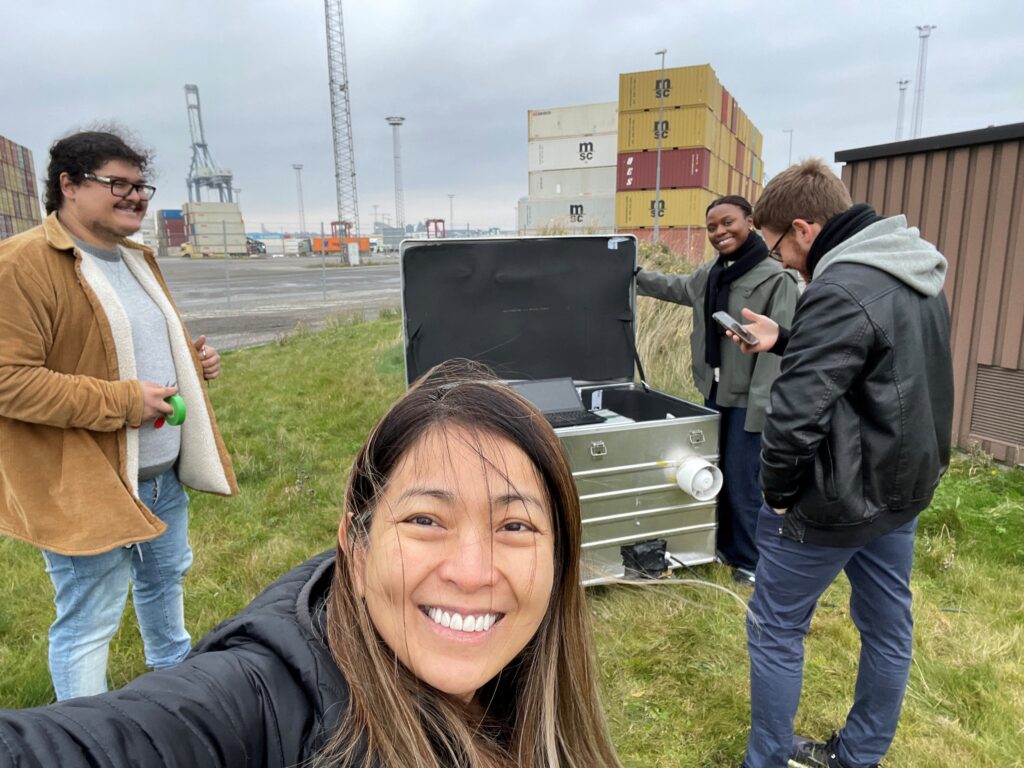
Danish Technological Institute (DTI) is currently hosting a measurement campaign at Aarhus harbour, Denmark for the European Horizon project MI-TRAP, focusing on real-time measurements of ship emissions from one of Denmark’s busiest ports. A mobile monitoring station is placed close to water in the harbour area, where container ships, passenger ships and other vessels manoeuvre, allowing continuous, online measurements of black carbon and ultrafine particle pollution.
Although Aarhus generally enjoys good urban air quality – comparable to or better than the Danish capital Copenhagen, thanks to its smaller size and windy conditions – the harbour remains a relevant hotspot where local exposure to transport emissions needs to be investigated.
What we measure – and why black carbon and particle matters?
Ultrafine particles and black carbon are the recent air quality parameters, which are crucial for understand of air pollution. Within MI-TRAP project, DTI works with industrial and university partners to develop and validate particle and black carbon measurement solutions for the real-time monitoring purpose.
Black carbon is the dark, light-absorbing fraction of soot formed during incomplete combustion in engines. It contributes to climate warming and is part of the most health-relevant fine and ultrafine particles, but it is still not regularly included in official air quality monitoring. By tracking black carbon in real time, alongside ultrafine particles, the campaign helps reveal how individual ship movements translate into short pollution peaks in the harbour area.
These activities support Aarhus’ broader efforts to monitor and manage air quality around the harbour area, helping the city to maintain high environmental standards while addressing potential impacts from intensive port operations.
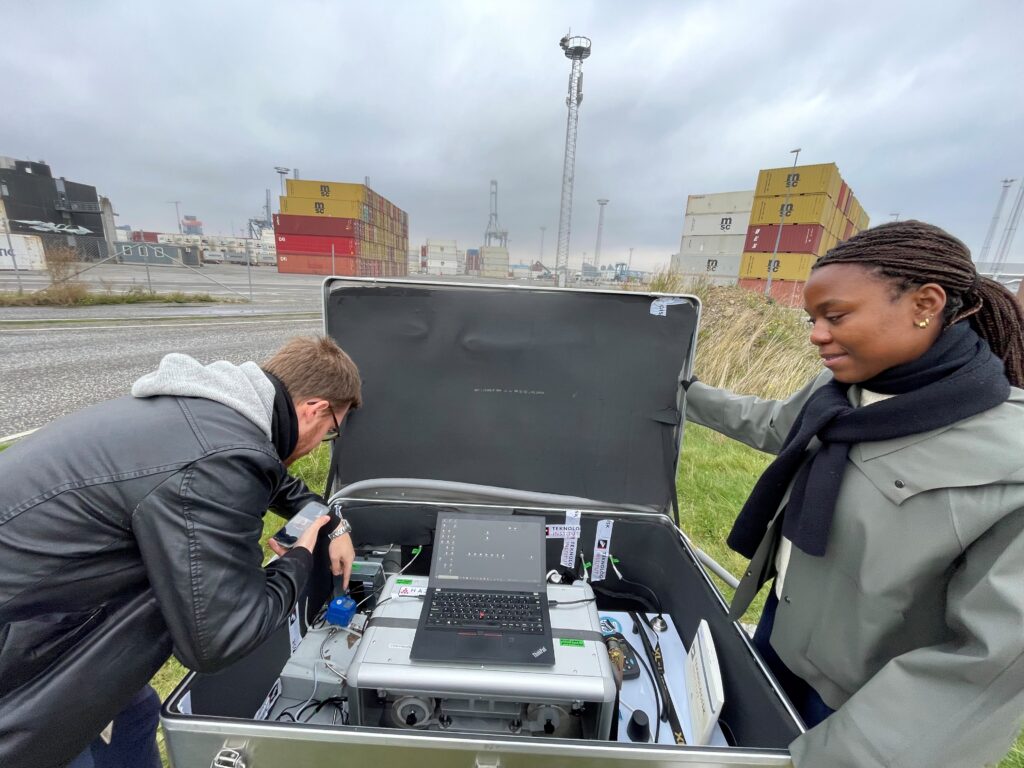
From online data to better methods
The Aarhus measurements show that continuous online monitoring of particles and black carbon works reliably in a complex port environment and can clearly identify ship plumes when conditions are right (e.g. favourable wind). These data are already feeding into:
- Ongoing development and refinement of particle and black carbon measurement technologies
- Comparisons with other MI-TRAP port pilots, where partners are testing complementary instruments and setups
- Joint discussions on traceability, calibration strategies and data quality across the consortium
Together with partners, the work in Aarhus supports MI-TRAP’s broader goal: to move “new pollutants” like ultrafine particles and black carbon closer to routine monitoring and to provide cities and ports with more robust evidence for managing transport-related air pollution.
The measurement campaign runs from November 2025 to February 2026.